Free shipping in the U.S. — Click here for details .
Sign in Join now
Lightspeed AviationLightspeed AviationLightspeed AviationLightspeed Aviation
    0
  •   was successfully added to your cart.
  • Shop
    • All Products
    • Headsets
    • ANR Kit for Helmets
    • Flight Bags
    • Accessories
    • Lightspeed Aviation App
    • Lightspeed App
    • FlightLink App
    • Authorized Dealers
    • Trade Up Program
  • About
    • About Lightspeed
    • Programs
    • Lightspeed Delta Zulu® Saves Lives
    • Awards and Accolades
    • Patents
    • Careers
    • Associations
  • Community
    • All Posts
    • Blog Posts
    • Events
    • News
    • Sponsorships
  • Support
    • My Account
    • Customer Support
    • Repair Request
    • Frequently Asked Questions
    • Shipping and Return Policies
  • Contact
    • Contact Lightspeed
    • Corporate Inquiries
    • Authorized Dealers
    • Donation Requests
    • Media Kit
Sign in / Create Account

Know the Signs to Survive CO

    Home Blog Posts Know the Signs to Survive CO
    NextPrevious

    Know the Signs to Survive CO

    By Lightspeed Aviation | Blog Posts, Delta Zulu | 0 comment | 7 September, 2022 | 2

    Carl Hancock is one of the lucky ones: one of the few pilots who have experienced carbon monoxide (CO) poisoning, recognized what was happening, and reacted in time to land safely. Potential tragedy was averted through awareness and a couple of lucky breaks, and Carl learned a few lessons that he’s eager to pass on that every pilot would do well to heed.

    Carl’s first lucky break happened before his fateful trip. He had interviewed Dan Bass, a pilot who had passed out from CO and, miraculously, crash-landed with minor, treatable injuries, including a whopping case of CO poisoning. So, Carl was keenly aware of the dangers and knew the signs.
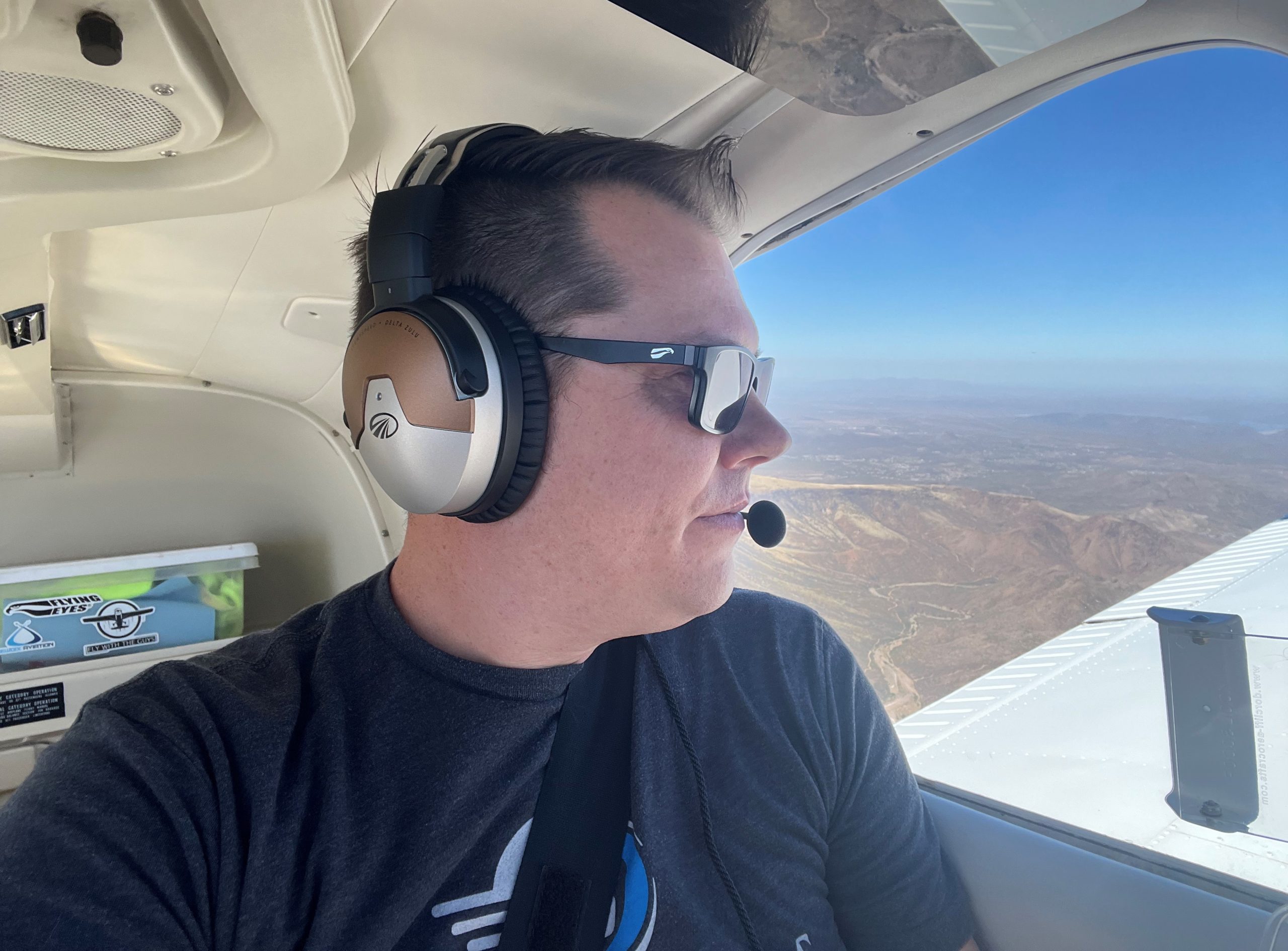
    Carl’s own rendezvous with CO began on the ground. He was at a top-rated flight school, getting ready to take up a REMOS GX. The plan was to do maneuvers with an instructor, familiarize himself with the aircraft, and get signed off for solo before beginning to work on his instrument rating. There weren’t enough mounts for both the cameras he wanted to bring and for his digital CO sensor, so he decided to leave his CO sensor behind. “I thought, ‘I know they take good care of their aircraft. It’ll be fine.’”

    As Carl and his instructor were running pre-flight checks, he could smell exhaust: the second lucky break was that the REMOS ran on automotive-type gas, not avgas, so the exhaust smell was obvious. But the engine was running, and the REMOS’ gull-wing doors were open, so the exhaust smell wasn’t unexpected. Once they closed the doors, took off, and got to their cruising altitude of 2,500 ft., Carl was too busy dealing with the unfamiliar plane and instruments to pay attention to the fact that the exhaust smell was still there. It wasn’t until 45 minutes later, when he was headed back to the runway for some touch-and-gos, that he realized that he had a headache, still smelled exhaust, and was beginning to feel fuzzy-headed. He told his instructor that he suspected CO problems, and they decided scrub the touch-and-gos and call it a day.

    Carl collected his gear and went home, and an hour later, he got an email from the flight instructor, who had immediately begun inspecting the plane for the source of the fumes. He found a loose flange on the exhaust manifold, which had allowed exhaust to escape into the cowling and thus into the plane. The flight school repaired the problem immediately, bringing the story to a happy ending.

    Carl feels fortunate for those lucky breaks, but he also approaches CO risks differently now. He says the biggest take-away from his experience is to always, always have a digital CO monitor with you. “Especially when flying an unfamiliar plane, you’re relying on the owner-operator to be sure the plane is safe and air-worthy. And even if the plane has been well-maintained and regularly inspected, as this one was, parts can fail between inspections. Many of these aircraft are being flown multiple times a day, and people may not fly it long enough for something to develop, or it may develop a little further the more it’s flown, and the last person to fly it may be the one who gets CO poisoning. So, you have to protect yourself by never flying without a digital CO sensor.”

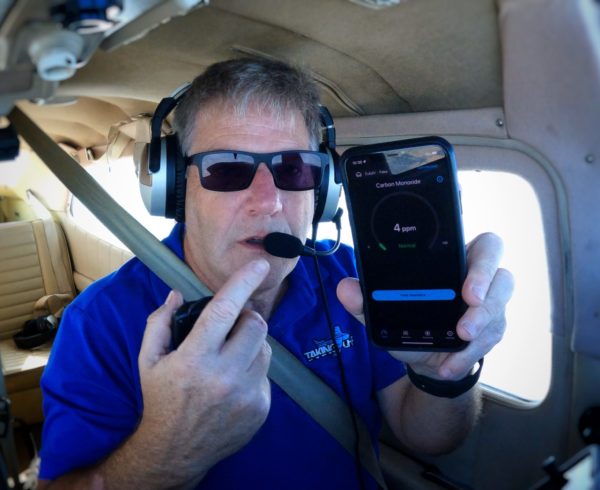
    Carl says you should also be proactive about managing CO risks in other ways. If you’re flying an unfamiliar plane, ask about the last time it was serviced. If there’s an aircraft that you fly regularly, watch the CO monitor and learn what level of CO is normal in it. (In the Cessna 172 that Carl frequently flies, the normal CO level is 0 ppm, so any deviation from that would be a sign of a developing problem.) Try to avoid breathing fumes on the ground, because ambient fumes, cigarette smoke, and other pollution can bring your carboxyhemoglobin (CO-saturated blood) level to a borderline 10%. Cigar smokers can have up to 15% carboxyhemoglobin from ambient CO plus smoking.

    Carl says he will also take warning signs even more seriously in the future. Everyone’s sense of smell and everyone’s reaction to CO is different. Carl was aware of the smell and the headache, and his flight instructor wasn’t. Some pilots who’ve experienced CO poisoning report headaches, confusion, and drowsiness, while others have passed out with no warning at all.

    Ultimately, Carl says, the hardest thing is to recognize the problem. First, it’s hard to quantify the risks of CO poisoning. “We have a lot of aircraft that crash, but by the time NTSB gets there, the CO is gone. I’m told that the go-to before digital CO sensors was a little card with a dot that would change from gold to black with CO exposure. But that takes over 45 minutes of exposure to change which can be too late for pilots and passengers, and it changes back within 45 minutes, too. If the NTSB got to a wreck within 45 minutes, they would know from that card that CO was the cause, otherwise they would never know. I tested it myself by putting one of those cards under the exhaust pipe of my vehicle, and it never changed. So, I made some calls and found out that it takes an excessive amount of CO to make these cards change. If I had that amount of CO pumping into the cabin, I’d be dead in 10 minutes.”

    The second issue is to recognize CO poisoning when it’s happening, and that’s where a digital CO sensor can save your life. “In pilot training, you’re taught about CO and the signs of hypoxia, but it’s not something you think about again after answering the questions on the test. It doesn’t seem relevant until you or someone you know is impacted by it. I talked to a couple of other pilots whose CO alarm went off, so they landed, and within ½ hour of landing they developed splitting headaches. But had that alarm not gone off, they’d no longer be with us because, at that point, they didn’t feel anything was wrong. And that’s the dual challenge: in a plane, you not only have to recognize the problem, you recognize it while you’re still functional enough get safely back on the ground. A digital sensor can buy you the time to do that. In a car, we could roll the windows down and let in fresh air. In an airplane, we can’t do that, and we can’t just pull over and get out.”

    carbon monoxide, carl hancock, CO, dan bass, dangers of CO, life saving, NTSB, pilot safety, safety

    Lightspeed Aviation

    Lightspeed Aviation is a leading manufacturer of premium aviation headsets and helmet products. Since the first product was introduced in 1996 at AirVenture in Oshkosh, WI., the company has established a reputation for leading innovation in the aviation headset marketplace with a number of “first to market” advances, technologies, and features. In 2022, the company launched a new category of aviation products called “Safety Wearables”. Layering life-saving technologies on top of their award-winning audio and ANR platform, Lightspeed ushered in a new era of aviation safety. With this, the company continues to live its mission of “creating products that protect and save lives”. Additionally, Lightspeed is a passionate supporter of initiatives to encourage the next generation of pilots through its support of programs like Young Eagles and Ray Scholars. The company is proud to have participated in helping countless young people experience everything from a discovery flight to getting a Pilot Certificate.

    More posts by Lightspeed Aviation

    Related Posts

    • Top 5 Things Customers Say They Love About Lightspeed

      By Lightspeed Aviation | 0 comment

      One of our goals at Lightspeed is to maximize the safety and comfort of our customers’ flying experience. But we couldn’t achieve that mission without our most important partner, the general aviation community. Your feedbackRead more

    • One year anniversary of the lifesaving Lightspeed Delta Zulu safety platform

      By Lightspeed Aviation | 0 comment

      LAKE OSWEGO, OREGON, SEPTEMBER 19, 2023 Lightspeed Aviation is celebrating the one-year anniversary of its flagship safety headset, the Lightspeed Delta Zulu™ this month. Since September 2022, over 10,000 pilots have benefited from the multitudeRead more

    • An Honest Take on Carbon Monoxide

      By Lightspeed Aviation | 0 comment

      Randy Powell knows carbon monoxide (CO). During a long career working with heating and air conditioning systems, he’s very much aware of CO emissions. In the course of his work, he’s had mild CO poisoningRead more

    • Fly with Guys host Carl Hancock talks about the Lightspeed Delta Zulu

      By Lightspeed Aviation | 0 comment

      Lightspeed had the opportunity to talk to Fly with the Guys host Carl Hancock recently about his experiences involving a carbon monoxide issue while he was flying. If Carl had the Lightspeed Delta Zulu ANRRead more

    • The Lightspeed Delta Zulu featured on In The Hangar

      By Lightspeed Aviation | 0 comment

      With the release of the Lightspeed Delta Zulu, Lightspeed Aviation’s President and CEO Allan Schrader and Executive Vice President Teresa De Mers had a chance to visit with Dan Millican and Christy Wong on theirRead more

    Leave a Comment

    Cancel reply

    You must be logged in to post a comment.

    NextPrevious

    Recent Posts

    • Profiles in Early Flight – Ray Scholar Stories September 2024
    • Every Pilot Deserves the Best Headset
    • Profiles in Early Flight – Ray Scholar Stories August 2024
    • Lightspeed Delta Zulu updates provide multiple hearing profiles and MORE
    • Profiles in Early Flight – Ray Scholar Stories June 2024

    Join Our Newsletter


      Top Rated Products

      • Zulu 3 ANR Headset Zulu 3 ANR Headset
        Rated 5.00 out of 5
        $899.00 Original price was: $899.00.$799.00Current price is: $799.00.
      • Gann Flight Bag - LightspeedAviation.com Gann Flight Bag
        Rated 5.00 out of 5
        $299.00
      • Markham Flight Bag - LightspeedAviation.com Markham Flight Bag
        Rated 5.00 out of 5
        $249.00

      Lightspeed Aviation, the leader in wearable ANR technology for pilots, operates with a simple strategy: know your customer well and remain committed to relentless product evolution. At Lightspeed, everything we do is in service to our customer and our products push performance to the edge of technological possibilities.

      Stay Updated – Sign Up Here


        Information

        • Contact
        • Frequently Asked Questions
        • Privacy Policy
        • Shop
        • About
        • Community
        • Contact
        • My Account
        © Copyright 2024 | All Rights Reserved
        • Shop
          • All Products
          • Headsets
          • ANR Kit for Helmets
          • Flight Bags
          • Accessories
          • Lightspeed Aviation App
          • Lightspeed App
          • FlightLink App
          • Authorized Dealers
          • Trade Up Program
        • About
          • About Lightspeed
          • Programs
          • Lightspeed Delta Zulu® Saves Lives
          • Awards and Accolades
          • Patents
          • Careers
          • Associations
        • Community
          • All Posts
          • Blog Posts
          • Events
          • News
          • Sponsorships
        • Support
          • My Account
          • Customer Support
          • Repair Request
          • Frequently Asked Questions
          • Shipping and Return Policies
        • Contact
          • Contact Lightspeed
          • Corporate Inquiries
          • Authorized Dealers
          • Donation Requests
          • Media Kit
        Lightspeed Aviation
          0 items