
Mountain airports are at relatively high elevations, where the air is thin—i.e., where its density is low. During the warmer months, the temperatures can be much higher than standard, and if there’s any humidity present, we have the classic “high, hot, and humid” combination that results in very low air density. Low air density (mass per unit volume) means high density altitude. As pilots, it is not very intuitive to speak of the air’s density being “x kilograms per cubic meter” or “y slugs per cubic inch,” so we index the air’s density into a standard atmosphere. This way, when we say that the density altitude is 3,000 feet, we’re simply saying that the air’s mass per unit volume is the same as it would be at 3,000 feet in a standard atmosphere.
Again, aircraft performance (the lift produced by the airfoil) is directly related to the air’s density (mass per unit volume). Density altitude gives us an intuitive way to describe this important metric and to normalize aircraft performance figures. Apart from the wing itself, there are three additional components that suffer under the effect of high density altitude operations: the engine, the propeller, and the pilot.
The lift that an airfoil produces is directly proportional to the air’s density—its mass per unit volume. If you cut the air’s density in half, you cut the lift produced in half. Similarly, the lift produced by an airfoil is proportional to the square of the airspeed[1]. In this case, all things being equal, doubling the airspeed causes the airfoil to produce four times as much lift. Equating the two under the assumption of constant lift can be useful: if the air’s density is cut in half, the square of the airspeed must be doubled in order for the lift produced by an airfoil to remain constant. Airspeed must be increased by approximately 41% in order for its square to be doubled, so in essence, cutting the air’s density in half requires 41% more airspeed in order for an airfoil to generate the same amount of lift.
As noted above, the wing’s performance degrades (less lift is produced) as the density decreases. At 18,000 feet, for example, where the air’s density is half what it is at sea level, a wing needs to be flying 41% faster to generate the same amount of lift as at sea level. So, in order to takeoff from a hypothetical airport at an elevation of 18,000 feet, an aircraft would need to attain a true airspeed 41% higher than it would at sea level in order to generate sufficient lift for flight. Performing the same analysis with a density altitude of 10,000 feet shows that TAS (true airspeed) must increase by about 15%—not insignificant. Fortunately, indicated airspeed is unchanged, but the sight picture out the windscreen will be quite different.
Lighten your load—but not when it comes to fuel
Assuming that the engine is normally aspirated, we can expect to lose about 3% of its available power per 1,000 vertical feet. Pilots with manifold pressure gauges see this directly. This means that at 10,000 feet, that 180 horsepower engine is only making somewhere in the neighborhood of 125 horsepower. What’s more, the propeller, being an airfoil just like the wing, creates less thrust just as the wing produces less lift. Aircraft equipped with cruise props will generally suffer more in this regard. All of this means that high-density altitude gives us a severely weakened engine, with a propeller that converts less of that engine’s horsepower to thrust while it’s attempting to drag the wing to a higher airspeed. There are suddenly lots of factors working against the pilot. The only viable way to deal with this is to lighten the load—although it’s generally not a good idea to skimp on fuel. Quite a few four-seat aircraft turn into two-seat aircraft to lessen the weight.
Remember, getting airborne is only the beginning: carefully consider your aircraft’s climb gradient and pay attention to the actual temperatures in the immediate vicinity of ridges. Radiation heating from the terrain could result in air temperatures well above standard, so density altitudes in excess of 12,000 feet are possible in the immediate vicinity of terrain. The bottom line is that your aircraft’s performance could be shockingly poor.
Do the math for your aircraft
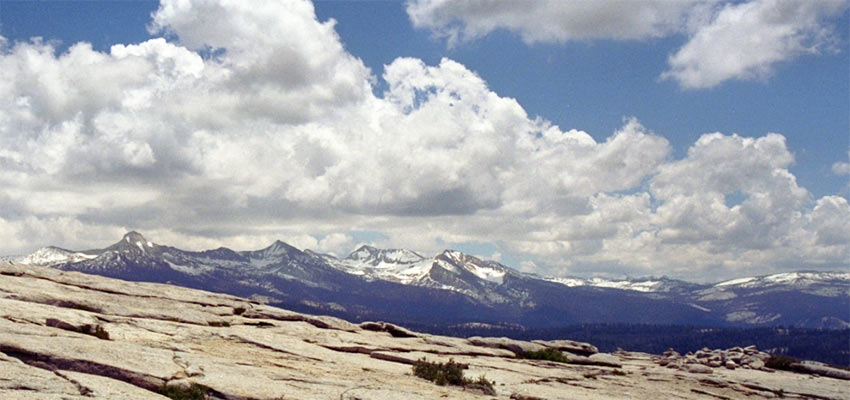 Let’s look at the Piper Arrow PA-28RT-201 as an example[2]. Assuming a pressure altitude of 5,000 feet and an air temperature of 30 degrees C, with the aircraft at full gross weight and no wind present, the book tells us that 1,800 feet is needed for the takeoff roll and 2,350 feet in total is required to clear a 50-foot obstacle. Once airborne, we can expect a rate of climb of 375 feet per minute at 7,500 feet (assuming 22 degrees C) and 325 feet per minute at 9,500 feet (assuming 18 degrees C). These climb numbers are half of what they are at sea level. Bear in mind that the handbook is quoting performance numbers for a new aircraft flown by a test pilot—your performance may vary, so it is wise to be conservative. The bottom line is that it may take 20 minutes or more to climb sufficiently to permit terrain crossing.
The Arrow is no hot rod, but it’s also not the weakest ship out there. These numbers show us what we have to work with in terms of typical light aircraft performance.
Part 3 will take a look at what we’re up against when it comes to mountain weather.
Footnotes:
- Mountain Flying Bible and Flight Operations Handbook, Sparky Imeson, Aurora Publications, Jackson, WY, 2001
- Piper PA-28RT-201 Pilot Operating Handbook











Leave a Comment