
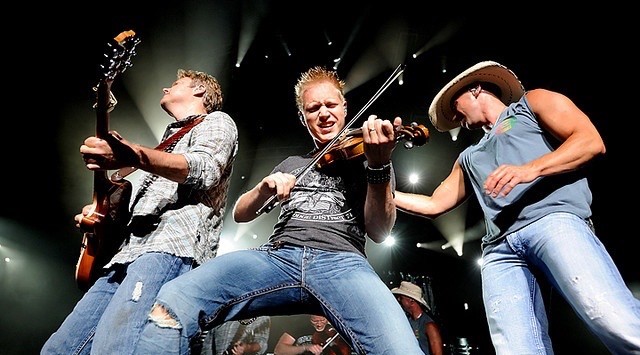
Nick Hoffman is a man of many talents. Millions of Outdoor Channel viewers know him as an outdoorsman, pilot, and host of the series Nick’s Wild Ride. To millions of country music fans, he’s a professional musician who’s spent decades performing with the greatest names in the business and is a top-selling recording artist with his band, The Farm. He seems to balance his passions for adventure, flying, and music effortlessly, with one exception. Twenty-five years in the music industry has taken a toll on his hearing. So, just as in his music career, he uses the sound technology to help deliver the best experience in the air.
Hoffman hails from a very musical Minnesota family and started playing the fiddle at age 4. He says there was a jam session every Saturday night at the Hoffman house, and one of his earliest memories is of falling asleep under his grandma’s piano bench while the adults were still playing. He started playing in bands by age 13. When he was barely 17, he ran away from home to Branson, Missouri, sleeping on park benches for a few weeks and eventually finding a job in a show that Dolly Parton owns. From there he moved to Nashville, played in bars, then landed a 12-year gig with Kenny Chesney that lasted from Chesney’s early years in small clubs to his superstardom, with the #1 selling show in the world. Since then, Hoffman has played as a side guy for many other country legends, including Tim McGraw, Keith Urban, Brookes & Dunn, Trace Adkins, Sarah Evans, Charlie Daniels, Willie Nelson, John Mellencamp, and more. In 2010, he was signed by Warner Bros with his band, The Farm. They’ve had two top 40 songs, and he has a new solo album coming out in early 2023.
While music is Hoffman’s first and deepest passion, he acknowledges that it has taken a toll on his hearing. Of course, hearing protection was the last thing on the minds of his teen band mates. And he says, “Especially in the early days of my career, I played every night in smoky bars and clubs with no protection and the amplifiers cranked up. It’s like being next to a jet engine for 4 hours straight. And my hearing paid for it.” The outdoor side of his life added to the problem: years of shooting firearms for trap, skeet, and hunting. In early days, he didn’t use any hearing protection for that either. He says, “Now I have constant tinnitus—my ears ring loudly 24/7—and I have probably 30–40% loss in my mid to high range hearing. That affects my daily life now, including my work as a pilot. So, any time I can do anything that helps protect my hearing now or to enhance my hearing with the loss that I have, I jump at those opportunities.”
Hoffman says that having an ANR headset makes all the difference to his safety and comfort in the cockpit. “ANR has been a game-changer because background noise is the enemy. With that, especially on top of my hearing loss, everything gets muddy. When you can use ANR to eliminate background noise, it allows me to hear any kind of communication—with both passengers and ATC—more accurately and at a quieter level that doesn’t damage my hearing. It’s also just so much more pleasurable.”
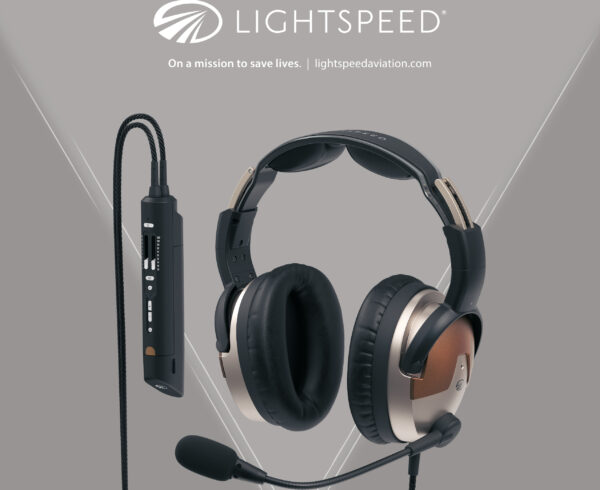
And he says ANR doesn’t interfere with his ability to hear how the engine is doing. “Your ears are not designed to operate at high volume. So, when you can bring ambient levels down, you can hear more subtleties. You hear all the same things, but slightly differently and, in my opinion, actually better.” And he especially loves the HearingEQity feature in the new Lightspeed Delta Zulu headset, which optimizes sound to the user’s hearing profile. “This is big for a guy like me who has a lot of high-end hearing loss, because I can shape the sound to my needs.” (As an artist, Hoffman also appreciates the aesthetics of the Lightspeed Delta Zulu. He says with a smile, “It’s ridiculously sexy. It’s the Scarlet Johansson of headsets.”)
Hoffman thinks we all need to be protecting our hearing better. “We often think that hearing loss only happens to older people. At 20 you don’t think about going bald, and at 30 you’re bald. Every young kid thinks they’re indestructible. My early days in bands were the start of my hearing loss, and I’m sure that my early days in aviation didn’t help. My hearing loss showed up already in my early 30s.” He says an ANR headset can be a lifesaver in a lot of ways, and not just in the cockpit: in a pinch, he’s used his Lightspeed Delta Zulu headset for hearing protection while cutting wood out in the barn.
The bottom line, for Hoffman, is that his life and livelihood depend on the ability to hear. “Both of my passions need hearing, but both can also take away hearing if you’re not careful. And you can’t pass the medical and you can’t go flying if you can’t hear. A good ANR headset from day 1 of flying is one of the best investments you can make. They might be a little more expensive, but they protect your long-term ability to fly.”



Leave a Comment