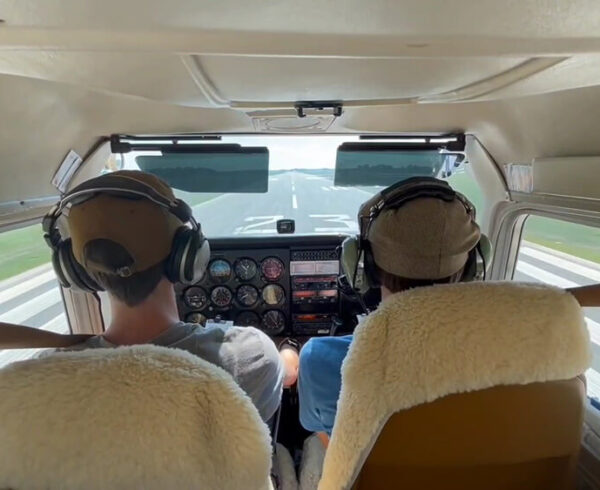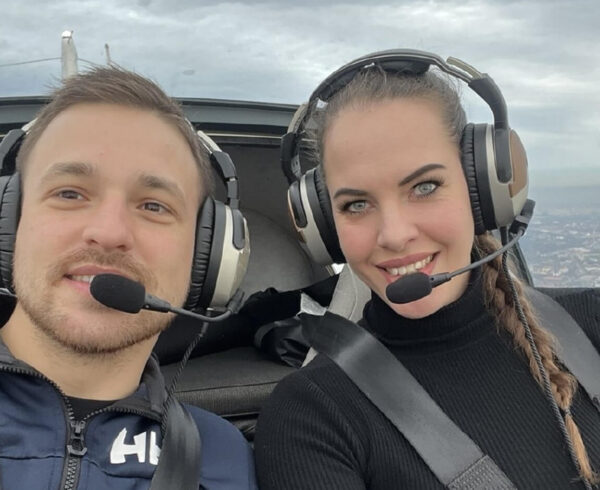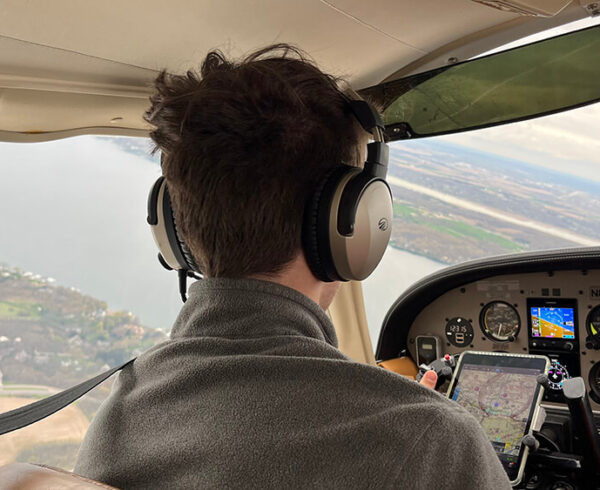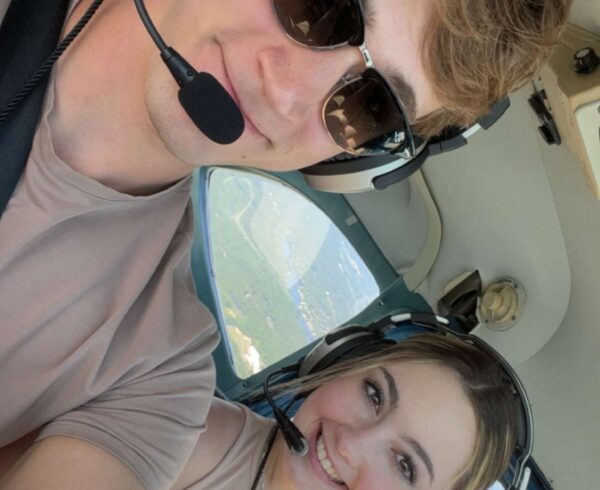
Although the history of powered flight dates back nearly 100 years, concerns about the effects of aircraft noise on hearing are relatively new. We’ve all heard the axiom, “there are old pilots; there are bold pilots; but there are no old, bold pilots.” We could add, “and precious few with normal hearing.” In fact, in the days of open cockpits and wire struts, pilots flew with ears unprotected and gradually damaged the hearing they desperately needed to be safe while flying. It is said that the whisper test, still used in the flight physical, has its roots in the perceived necessity for pilots to hear the singing of the support wires while in flight.
While most cockpits today are closed and there have been advances in sound treatment (i.e. mufflers, soundproofing insulation, etc.), cockpit noise levels still are well above safe levels. Today’s pilots and passengers are subjected to noise that can have numerous adverse effects, including:
- Permanent hearing loss
- Stress and fatigue
- Masking of wanted sounds
- Negative effects on speech perception and recall
Aircraft Noise and Your Hearing
Permanent hearing loss
The human auditory system is a bio-electrical marvel. Under ideal conditions, the human ear is said to be capable of hearing a sound roughly equivalent to pressure exerted by a gnat’s wing, yet able to tolerate sounds literally millions of times greater. So responsive is the ear that early researchers adopted a logarithmic scale for hearing measurement. In this scaling system, a sound of 100 decibels (dB) is 100,000 times greater than a sound of zero dB, and a 120 dB sound is a million times greater than that same zero dB sound.
Noise-induced permanent threshold shift (hearing loss) can occur from repeated exposure to damaging noise levels. 1,000-3,000 Hz noise levels have more damage potential for human hearing than do those of lower frequencies, though sufficient levels of low-frequency sounds can produce permanent hearing loss.
One thing is certain: Beyond certain levels, increased intensity and exposure time will produce increased hearing loss. The hazard spreads over a frequency range as exposure time and dB level increases. In the typical small aircraft, cabin noises tend to be concentrated in the lower frequencies and are sufficient to cause hearing loss with prolonged exposure. Flying without ear protection for long periods and with repeated exposures places pilot and passengers at a risk of hearing loss.
Active noise canceling headsets provide relief in two distinct ways:
- They reduce the levels of low frequency noise exposure. Most GA aircraft have high levels of low-frequency noise and even the best passive protectors are relatively poor at sufficiently attenuating this part of the noise spectrum. The best active headsets provide exceptional protection at this specific range.
- They permit the communications audio signals from radios and intercom to be intelligible at reduced volume levels. Because of the masking effects low frequency noise has on speech, we tend to turn the volume up to be able to (partially) hear normal voice frequencies better. We often will turn up the communications audio directly to our own ears (through the headset speakers) in an effort to better hear and understand what’s being said. When flying with an effective ANR headset, you naturally will turn down your audio signal because you can understand ATC much better.
Stress and fatigue
Noise-induced stress is colored by previous experiences, conditioning, and the character of the noise itself. Higher frequency sounds are generally more disturbing and higher pitched sounds are often associated with danger.
Loud sounds are more stressful than quieter ones of similar character. Vibration and lower frequency sounds induce fatigue and influence our ability to focus. The physiological effects of this constant “pounding” were studied in depth by the military as a source of mission errors. The effect on the recreational pilot is less well documented, but no less a concern in carrying out your flying mission. Long-term exposure to aircraft noise not only can produce fatigue but may also lead to mental errors.
Obviously, active noise reduction systems reduce overall noise levels and a quieter environment makes flying less stressful. The effect of reductions of low frequency noise on a pilot’s mental condition hasn’t been well studied, but the anecdotal reports we hear are consistent: pilots regularly comment on how much better they feel both during and after flights when they wear ANR headsets.
Speech Intelligibility
Masking of wanted sounds
While human speech ranges in frequency from slightly below 100 Hz to as much as 10,000 Hz, the energy of speech is heavily concentrated in the lower frequencies. Ninety to ninety-five percent of the energy of speech is in frequencies below 500 Hz. Typically this energy is concentrated in the vowel sounds. The consonants carry most of the meaning of speech in the 1 kHz to 6 kHz range but these are very weak (low energy) sounds. Consequently, the weak consonants are easily masked by noise, making it difficult to understand what’s been said. It doesn’t take much masking before intelligibility is impaired, as the following data from one study of adults with normal hearing shows:
| Loss of Consonants | Intelligibility for Adults |
| 4% or less | Very Good |
| 5%-8% | Good |
| 9%-11% | Fair |
| 12%-14% | Minimal |
| 15% or more | Unintelligible |
The implications for pilots are straightforward: even a ten-percent loss in consonant sounds will substantially limit comprehension. In the cockpit, the danger of missing or mishearing verbal instructions is a very real concern.
Given what we’ve already learned about the low-frequency dB levels encountered when flying, excessive levels can easily overwhelm the important consonant sounds. The danger of masking all noise in an aircraft is that we may miss important signals either from controllers or other warning signals that we really need to hear accurately. Masked noises contribute to stress levels as we strain to hear, process, and understand the multitude of signals and data we manage as we’re flying. And turning up audio to clarify muffled ATC communications can contribute to hearing loss. With all this in mind, masking of wanted sounds may be the biggest danger in an aircraft.
Active noise reduction systems reduce the masking effects of the low-frequency spectrum your ear hears. The most effective systems will substantially enhance your ability to hear and understand the audio communications. Most pilots who try an ANR headset for the first time notice this benefit.
Negative effects on speech perception and recall
Elevated levels of noise substantially impair our ability to recognize words. When noise levels exceed 85 dB, they begin to have adverse effects on speech comprehension. The key to greater word recognition is in getting the communication audio signal significantly above the ambient noise. That’s a hard task for pilots since we’re exposed to cabin noises with a significant low frequency component. When audiological professionals want to create speech masking sounds, that’s precisely the type of noise they use. The typical cockpit is an excellent speech “masker.”
Studies have shown we need at least a 9 dB difference in the audio signal above the ambient noise levels in our headset to achieve eighty-percent word recognition or better. That difference in dB level is typically expressed as Signal-to-Noise Ratio (abbreviated S/N or SNR). A S/N ratio of 12-15 dB allows a ninety-percent recognition rate. We know how loud the noise spectrum is in most planes — particularly at the lower frequencies. The combination of masking effects and overall ambient sound levels makes hearing and understanding communication very difficult. Most of us know what that sounds like, from ATC calls we miss altogether to ones that prompt us to make repeated “say again” requests.
The higher background levels of noise when flying also changes our hearing threshold, making previously understandable words unintelligible. Beyond just the S/N ratio issues involved in protecting word recognition, our ability to process speech and sounds is adversely affected by higher background noises. For example:
- Accuracy of comprehension declines, as does response speed.
- Time-sharing of attention among several potential signals becomes more difficult.
- Recall (memory) is impaired, as is our ability to handle delayed information effectively.
In other words, prolonged noise exposure affects our understanding, attention sharing, response time, and short-term recall of what was said. None of these are good things for a pilot, so anything that can be done to quiet things down is good.
Some final thoughts
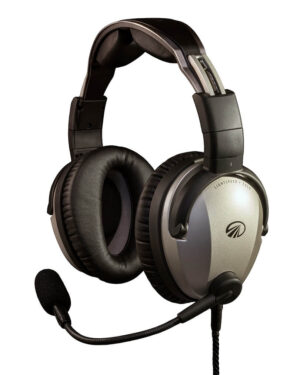
Being a pilot is a complex job with many responsibilities. Active Noise Reduction makes doing those tasks both easier and less stressful. An ANR headset like the Zulu 3 provides additional noise suppression in an area of the noise spectrum that will make communication clearer and increase attentiveness.
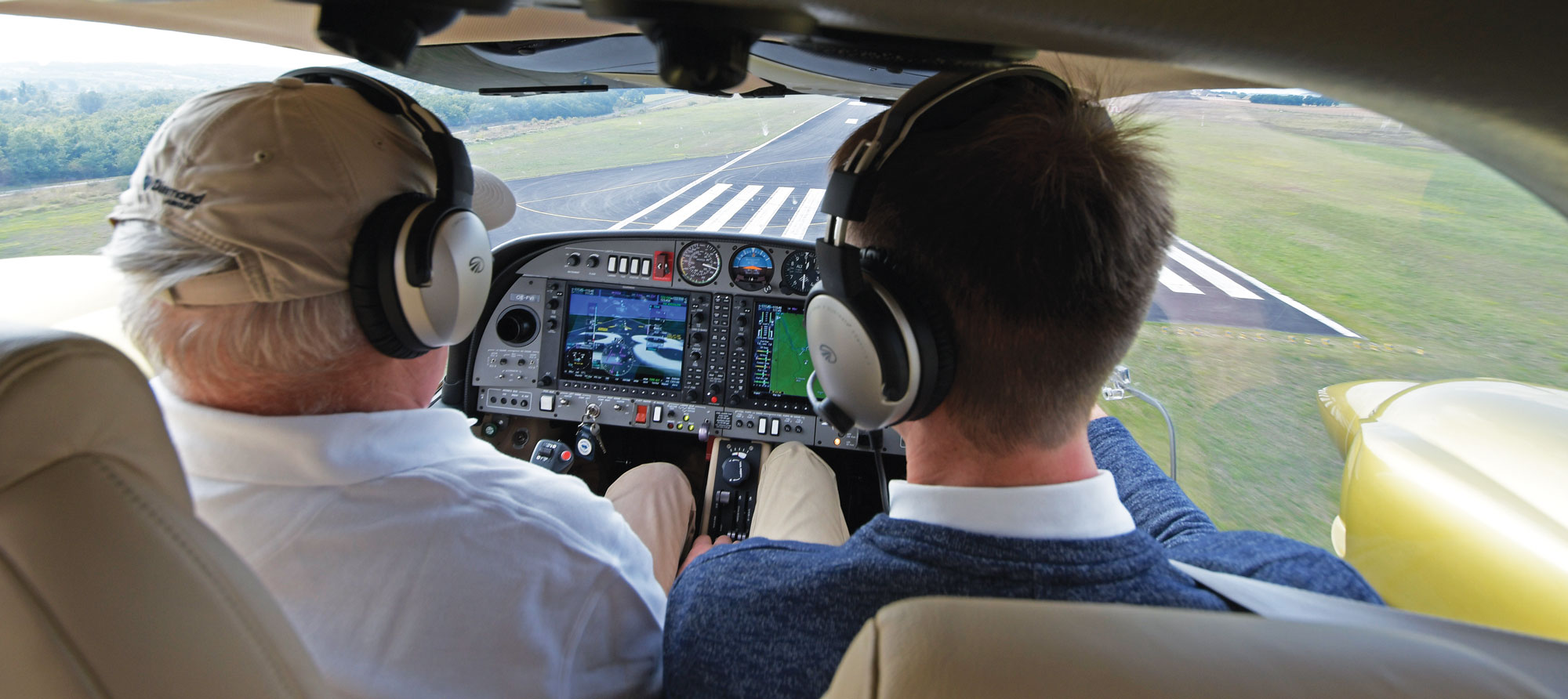
ANR will make you a more attentive and safer pilot. It will protect you from long-term hearing damage. You’ll finish the flight more relaxed, and enjoy flying more. Flying with an ANR headset can enhance the health, comfort and safety of you and your passengers’ flying experience. So keep your altimeter up and your dB down!
To learn more about Lightspeed’s line of ANR headsets and how they can protect your hearing and encourage a safer more comfortable flight, visit LightspeedAviation.com.
NOTE: Dr. Jim Yates provided substantial contributions to this article. Dr. Yates was a Professor and chair, S.P.A. of John A. Burns School of Medicine, University of Hawaii, and principal of Audiology Associates Hawaii.